
Research
In general, research in the lab revolves around plant community and restoration ecology in dryland ecosystems. The lab has experience working in desert plant communities in southern Arizona, semi-arid woodlands in Western Australia, semi-arid shortgrass steppe in Colorado, and sagebrush steppe plant communities in the western United States.
Sustainable Rangeland Restoration Practices
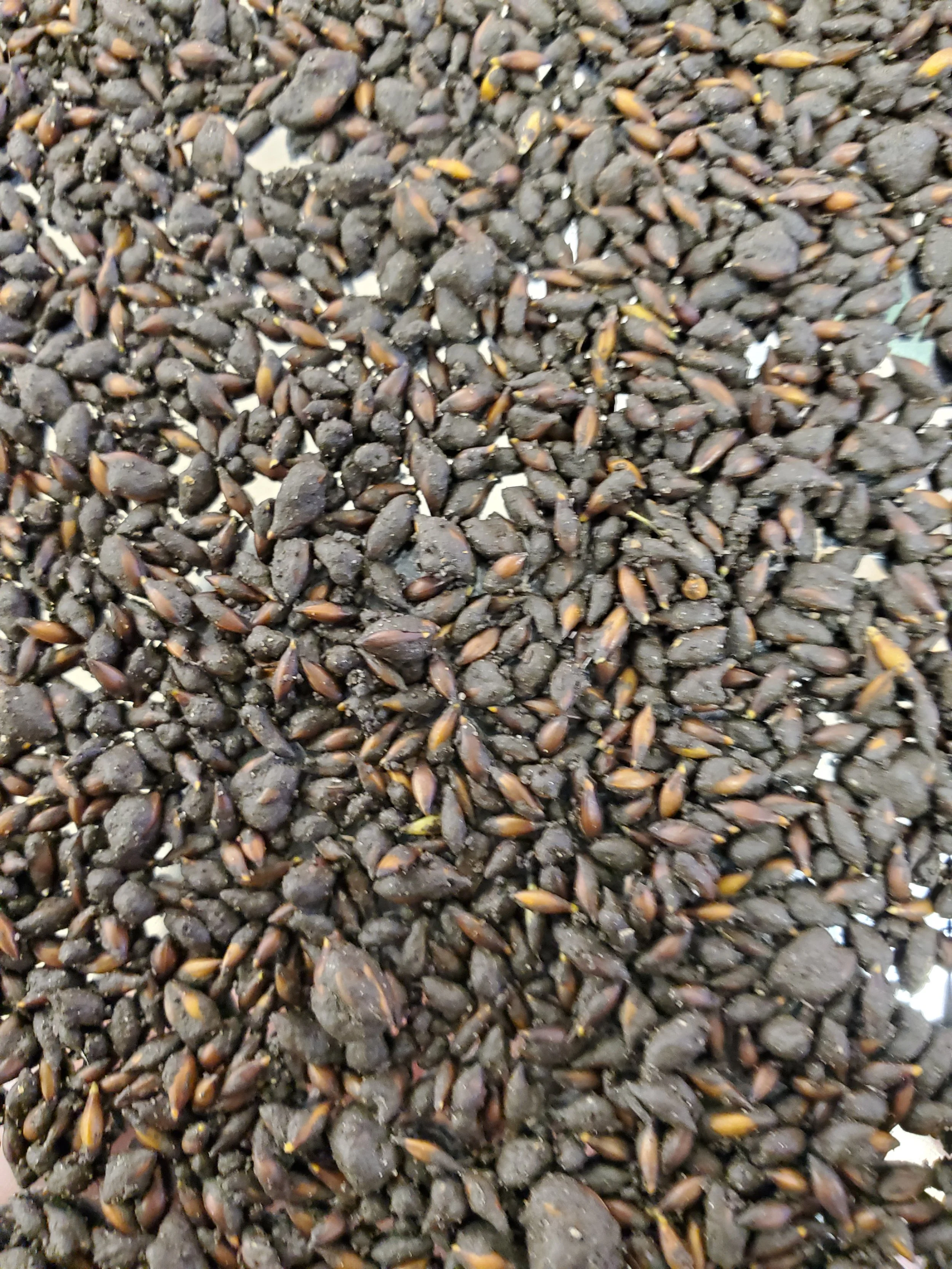
Testing seed coatings
Restoration in dryland plant communities across broad heterogeneous landscapes and in varible climatic conditions is difficult. The Martyn lab is exploring a diverse set of restoration practices and technologies to understand how we can better prescribe restoration projects to specific locales. This includes testing different native microbial seed coatings, trialling restoration islands, testing the impacts of changing winter weather conditions on seedling survival, and using modeling to understand potential climate variability impacts on restoration practices and outcomes.
Spatial and environmental effects on plant interaction outcomes

Collecting spatial data using a pantograph in annual plan communties in Western Australia
Strong evidence of non-random spatial arrangements are often interpreted as evidence of the importance of local interactions on plant survival and population growth. In addition, environmental conditions vary heterogeneously across a landscape changing the context of these interactions. If spatial patterns within plant communities are non-random, then exploring the potential environmental drivers of those patterns gives us understanding about plant community structure and function.
Understanding the drivers and effects of spatial arrangement of individuals and species can also help inform restoration practices. Currently, the Martyn Lab is working on projects such as understanding how spatial arrangement in restoration seeding may impact germination, survival and fitness as well as how different climatic conditions can change competitive dynamics of invasive species.
Using functional traits to understand environmental change impacts and improve restoration practices

Functional traits are known to affect how species interact , how plants respond to the environment , and how plants can impact the ecosystems services of the community. Thus, we can understand plant community dynamics using functional traits that are linked to performance, demographic rates, and ecosystem services to improve understanding of ecosystem responses to environmental change across time and space.
Community DYNAMICS Over Time and Space

Figure 1. Modified from Schlaepfer et al. (2015) Ecosphere.
To explore community dynamics over time, we like to look both behind and forward.
We are currently working on a project to explore the impact of climate on sagebrush growth. This work includes correlating climate data with annual sagebrush ring widths. This is a way to determine impacts of climate on past growth of plants.
To look ahead we often have to rely on models. Individual-based models (IBMs) are an ideal tool for exploring how best to develop from predicting fitness of an individual to predicting vegetation dynamics at a community level. Current collaborations with Drs. William Lauenroth (Yale), John Bradford (USGS), Daniel Schlaepfer (USGS), and Kyle Palmquist (Mashall Uni), work on using an IBM (STEPWAT2) to understand plant community composition and biomass responses under predicted climate change.